
Automated Property Monitoring for Commercial Buildings
Sensors Check Temperatures Every Minute and Alert Staff Instantly of Issues
Protect Your Buildings.
Prevent Damage.
Save Money!
The average frozen pipe insurance claim exceeds $16,000, with extreme cases even reaching seven figures when water damage affects multiple floors and results in infrastructure damage.
Rivercity Innovations provides automated property monitoring with real-time sensors that detect water leaks, HVAC failures, and temperature problems in commercial buildings, datacenters, and construction sites. Sensors operate 24/7 to prevent frozen pipes, water damage, and costly insurance claims. Property managers receive immediate alerts when environmental conditions threaten building infrastructure.
Catch these problems early with automated property monitoring sensors that work 24/7, so you can catch small issues before they become big losses!
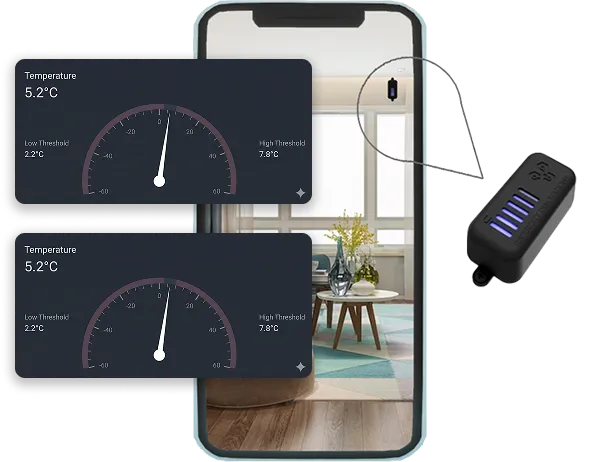
Prevent Catastrophic Damage & Save Thousands with Automated Property Monitoring
Even with fantastic insurance, your business can suffer financially from paused operations and even reputational risk.
Many environmental risks go unnoticed until the damage happens. If any of these apply to your facilities, automated monitoring is something you should consider.
Heating System Failures
Problem
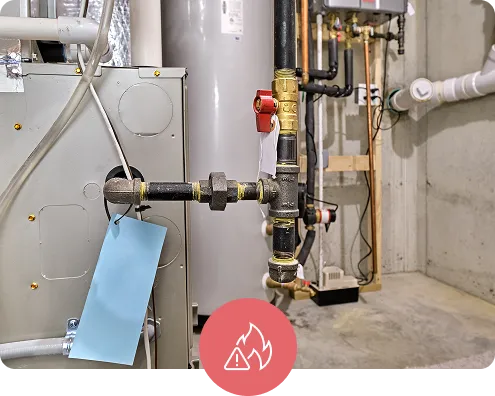
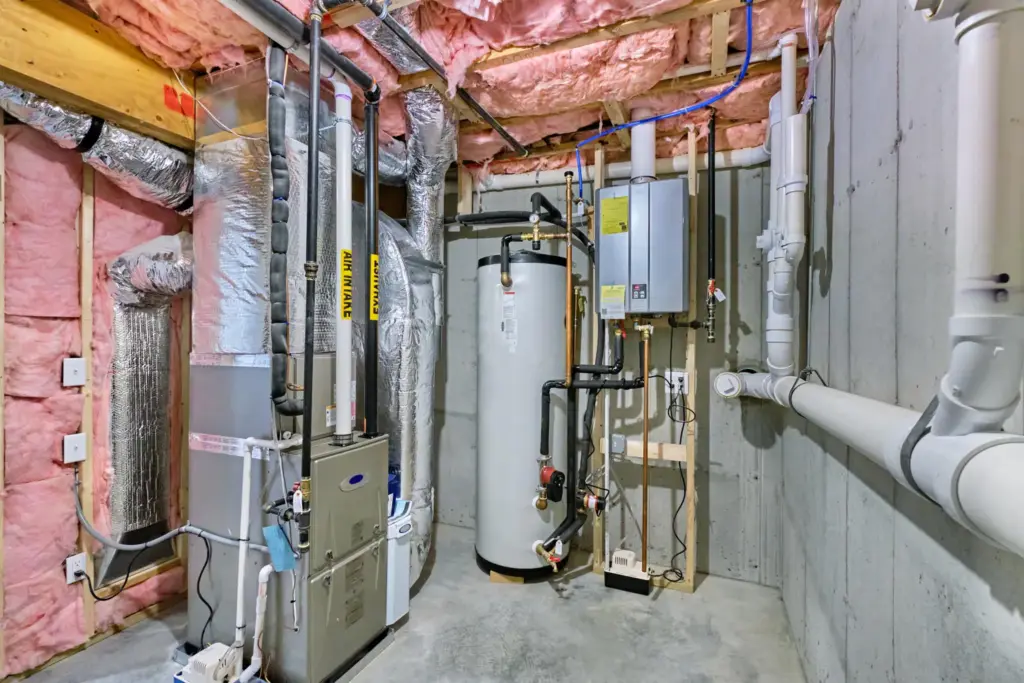
Heating system failures cause burst pipes in empty buildings without constant monitoring, especially if there’s no one around to notice the low temperatures.
Solution
Temperature sensors track conditions in vulnerable areas and alert maintenance teams at 3°C (38°F), providing 2-4 hours before pipes freeze at 0°C (32°F). Sensors detect HVAC failures 6-12 hours before tenants notice problems, allowing maintenance during business hours instead of after-hours emergency calls that cost 3-4 times more!
Flood Damage
Problem
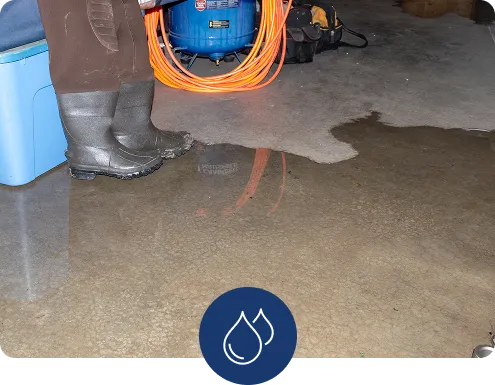
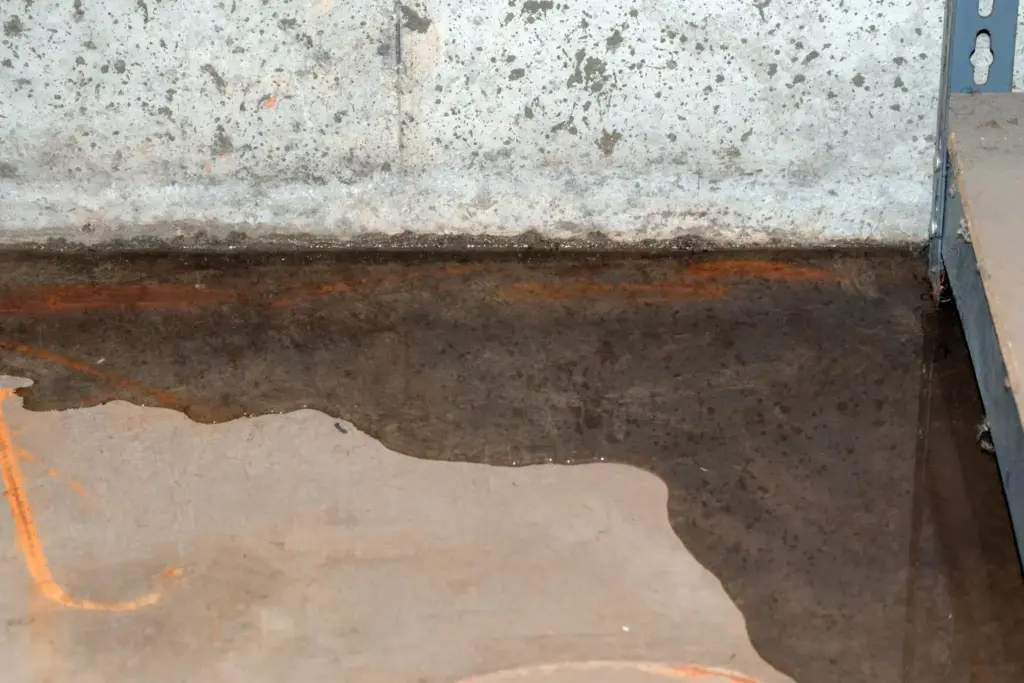
A small leak in a basement mechanical room can turn into a flooded disaster overnight—even small leaks can release 200–400 litres (50-100 gallons) per hour.
Solution
Wireless water sensors detect moisture the moment liquid touches the floor near pipes, drains, and equipment. The monitoring system transmits alerts to facility teams within 60 seconds, preventing small leaks from escalating into floods that create major damage!
Concrete Structures Where WiFi Systems Fail
Problem
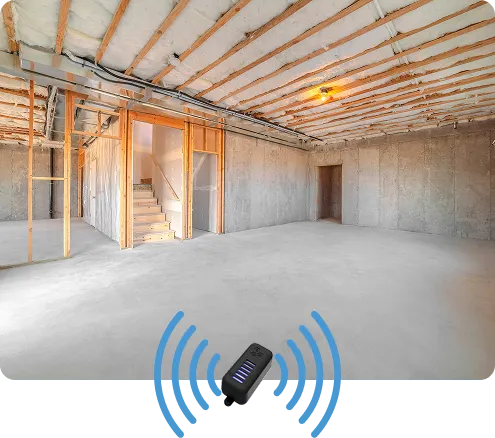
Thick concrete walls and steel-reinforced structures block WiFi signals, leaving traditional monitoring systems useless in the spaces that need them most. Businesses like data centres require environmental monitoring to prevent downtime that costs $5,000 to $9,000 per minute.
Solution
Long-range wireless technology maintains connectivity through concrete and steel barriers that block WiFi signals. Sensors transmit through 12-18 inches of concrete and operate for 3-5 years on battery power.
Do You Have Monitoring Gaps at Your Property?
Does your property or properties have coverage for these areas?
- Temperature monitoring in mechanical rooms and basements (0°C, 32°F freeze threshold)
- Water leak detection near pipes, drains, and HVAC condensate lines
- HVAC system monitoring to detect failures before tenant complaints
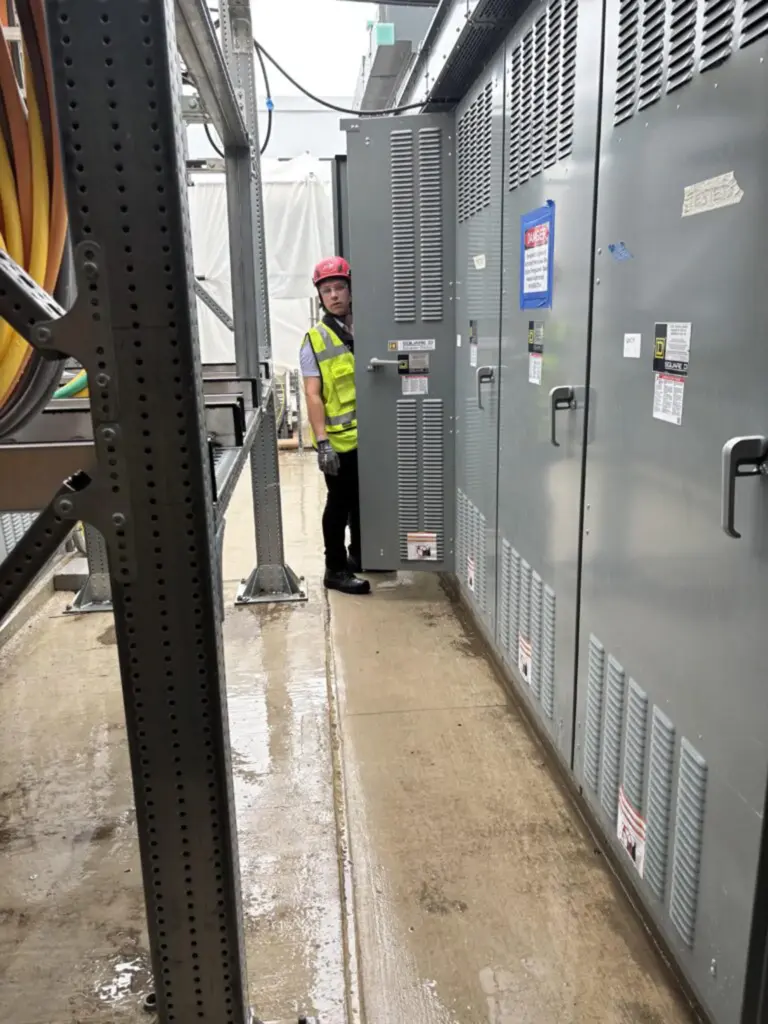
- Electrical switching cabinet monitoring for overheating conditions
- Backup generator monitoring for temperature and operational status
- 24/7 monitoring coverage during nights, weekends, and holidays
- Real-time alerts that reach on-call maintenance teams within 5 minutes
- Coverage in concrete structures where WiFi-based systems fail
Properties without coverage in three or more areas could be at major risk! Any issues that aren’t detected quickly could result in insurance claims, tenant disruption, and emergency repair costs.
Automated Monitoring Reduces Costs & Saves You Money
Manual building walkthroughs eat up staff time and still miss problems between inspections. Manual walkthroughs often consume 2-4 hours of labour per property, per week!
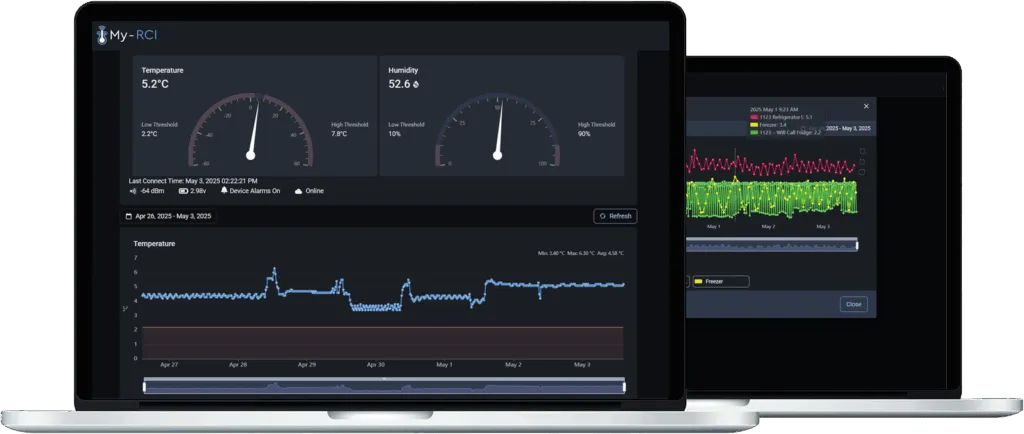
Automated sensors perform continuous checks every minute of every day! This means that your maintenance teams can focus on fixing problems and improving facilities instead of walking around with clipboards checking for leaks and frozen pipes.

Automate Manual Inspections
Sensors check every monitored space continuously, freeing up staff for more valuable work than routine walkthroughs.
Support Insurance Negotiations
Digital sensor logs prove active risk prevention to insurance carriers, demonstrating continuous oversight and faster response times, and potentially getting you a better rate.
Avoid Emergency Fees
Scheduled maintenance costs a fraction of emergency after-hours repairs. Fix problems during business hours instead of paying premium rates at 2 AM.
Commercial Monitoring for All Industries
Whether managing a single building or hundreds of locations, Rivercity provides scalable monitoring solutions without the complexity and cost of traditional building automation systems.
We support clients with a variety of property types, such as:
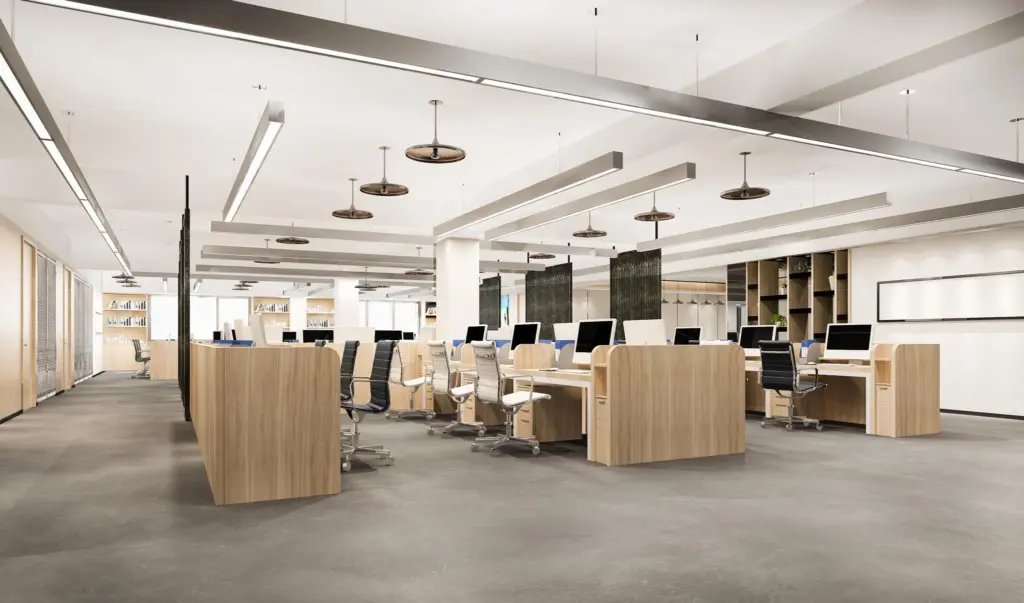


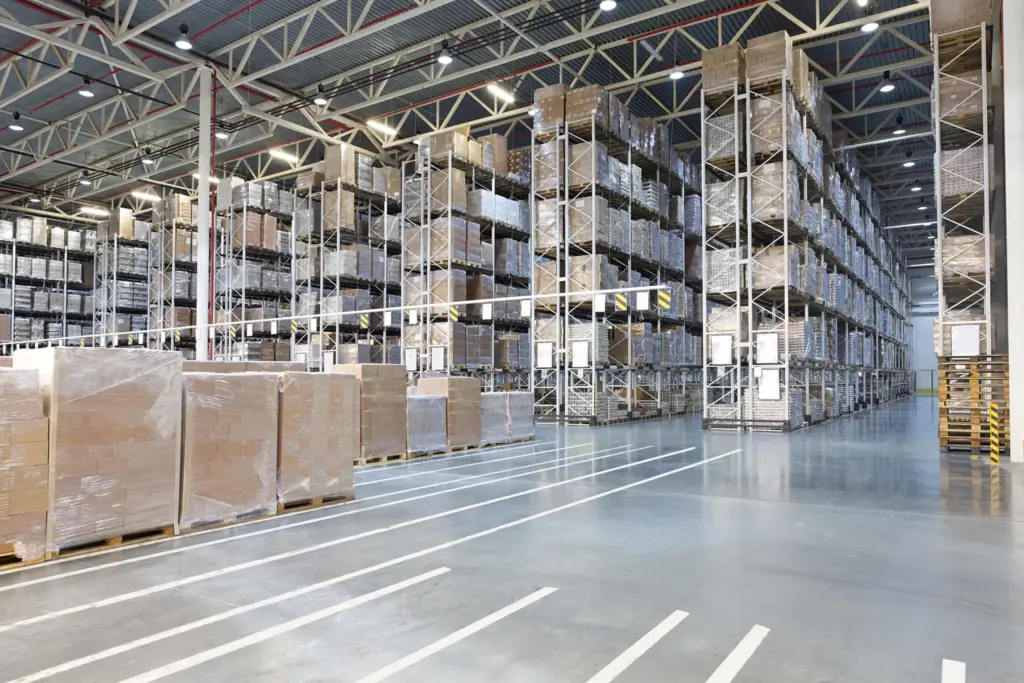
Monitor your entire portfolio from a single platform whether you manage one building or hundreds!
Temperature Failures Cost Buildings and Datacenters Millions
Unmonitored temperature failures produce two distinct financial consequences depending on the environment: in commercial buildings, burst pipes from undetected HVAC failures generate insurance claims that routinely reach tens of thousands of dollars, with multi-floor water damage capable of generating six-figure repair and claims costs. In datacenters, uncontrolled temperature excursions cause server shutdowns that cost thousands of dollars per minute of downtime. Both consequences share a common cause — a gap between when a condition changes and when a maintenance team learns about the change.
HVAC Failures Escalate When Detection Arrives Too Late
HVAC systems in commercial buildings and datacenter facilities often fail hours before occupants or on-call staff notice any symptom. During those hours, water leaks from compromised pipes or condensate lines can release significant volumes of water per hour. After-hours emergency repairs cost 3–4 times the rate of scheduled maintenance — meaning the financial damage compounds at every stage of a delayed response.
Humidity Creates a Second Failure Mode in Datacenter Environments
Automated temperature monitoring for buildings and datacenters addresses temperature as the primary variable, but humidity drives a separate and equally damaging failure mode in server environments. Relative humidity below 40% RH increases static discharge risk to circuit boards and storage media. Relative humidity above 60% RH creates condensation conditions on server components, accelerating corrosion and short-circuit risk.
Temperature and Humidity Risk Thresholds by Environment Type
| Environment | Temperature Alert Threshold | Humidity Alert Threshold | Primary Risk if Exceeded |
|---|---|---|---|
| Commercial Building | 3°C (38°F) — freeze warning | Above 70% RH — mould risk | Burst pipes, water damage, insurance claim |
| Datacenter / Server Room | 27°C (80°F) — ASHRAE upper limit | Below 40% RH or above 60% RH | Server thermal shutdown, static discharge, corrosion |
LoRa, WiFi, and Cellular Sensors Perform Differently in Dense Structures
Selecting a wireless sensor technology for automated building and datacenter monitoring requires evaluating three attributes that vary significantly across LoRa, WiFi, and cellular networks: signal penetration through concrete and steel, battery duration between replacements, and per-transmission data cost. Buildings constructed with thick concrete walls or steel-reinforced frames eliminate WiFi-based sensors as a viable monitoring backbone, because WiFi signals degrade through standard concrete at distances that leave mechanical rooms, basements, and server cage interiors without reliable coverage.
Battery Life Determines Reliability in Hard-to-Access Monitoring Zones
LoRa sensors achieve up to 10 years of battery life because LoRa devices transmit only small data packets — temperature readings, humidity values, and alarm triggers — rather than maintaining continuous high-bandwidth connections. Cellular sensors consume significantly more power through constant network handshaking with cell towers, requiring more frequent battery replacement or wired power in zones where access is difficult. WiFi sensors draw continuous power to maintain association with access points, making battery-operated WiFi sensors impractical in the mechanical rooms, datacenter sub-floors, and remote building spaces where monitoring gaps most commonly occur.
Wireless Sensor Technology Comparison for Buildings and Datacenters
| Attribute | LoRa | WiFi | Cellular |
|---|---|---|---|
| Concrete / steel penetration | Superior penetration through walls and obstructions | Degrades through 1–2 walls | Requires line-of-sight to tower |
| Battery life | Up to 10 years | Hours to days (access point dependent) | Poor — frequent replacement needed |
| Urban range | Up to 2 km | Up to 100 metres indoors | Up to 1 km (tower dependent) |
| Data transmission cost | Very low | Low (infrastructure cost high) | Higher per-transmission fees |
| Security protocol | 128-bit AES, 2-layer encryption | WPA2/WPA3 (single layer) | Carrier-managed encryption |
Encryption Standards Matter in Regulated Building and Datacenter Environments
LoRaWAN applies 128-bit AES end-to-end encryption across two independent layers — one securing the network connection and one securing the application data — so sensor readings from electrical switching cabinets, backup generators, and server racks remain protected in transit. Facilities handling regulated data or temperature-sensitive inventory subject to NIST or HACCP compliance requirements need encrypted sensor communications as part of a defensible monitoring record. LoRa network operators cover most countries, meaning the same sensor infrastructure scales across multi-country building and datacenter portfolios without requiring separate regional network agreements.
Placement Rules Determine Whether Monitoring Catches Failures Early
Industry best practices recommend placing 6 sensors per datacenter rack — three at the front (top, middle, and bottom) to measure server intake air temperature, and three at the rear (top, middle, and bottom) to capture exhaust heat. Rear sensors identify hot spots where exhaust from high-density servers creates localized overheating even when ambient room temperature reads within the ASHRAE operating range of 18°C–27°C (64°F–80°F). Front sensors confirm whether cooling systems deliver intake air at the correct temperature before air enters server chassis.
Commercial Buildings Require Coverage Across Structural Weak Points
Building monitoring gaps most commonly occur in mechanical rooms, basements, roof-level HVAC units, electrical switching cabinets, and unoccupied floors — zones that manual walkthroughs check infrequently and WiFi-based sensors cannot reliably reach. Temperature sensors in mechanical rooms alert facility teams at 3°C (38°F), providing 2–4 hours to intervene before pipes reach the 0°C (32°F) freeze threshold. Properties without automated sensor coverage across these zones face compounding risk, because an undetected HVAC failure in one zone can trigger cascading damage in adjacent zones before any alert reaches the maintenance team.
Standard Sensor Placement Zones for Buildings and Datacenters
- Datacenter server racks: 6 sensors per rack (front and rear, top/middle/bottom) per industry best practices — detects hot spots and cooling delivery failures at the rack level.
- Mechanical and boiler rooms: Temperature sensors alert at 3°C (38°F) — provides 2–4 hours of response time before pipe freeze at 0°C (32°F).
- Electrical switching cabinets: Temperature sensors detect overheating conditions before arc flash or equipment failure develops.
- Backup generators: Temperature and operational status monitoring supports datacenter continuity planning and building emergency power verification.
- HVAC condensate lines and floor drains: Water leak sensors detect moisture quickly upon contact, before small leaks escalate to flood damage.
- Unoccupied floors and basements: Continuous automated temperature monitoring for buildings and datacenters covers spaces where manual walkthroughs occur infrequently and failures go undetected longest.
Deployment Speed and Calibration Standards Support Multi-Site Rollouts
Facilities managers evaluating automated temperature monitoring for buildings and datacenters across multiple sites should verify three deployment criteria: installation time per site, sensor calibration standard, and infrastructure dependency. TxH sensors from Rivercity Innovations require no WiFi password, no power outlet at the sensor location, and complete full building deployments in under 3 hours — reducing per-site rollout cost significantly compared to wired monitoring systems. NIST-calibrated sensors accurate to 0.2°C and certified for 5 years support compliance reporting for regulated environments, and automated digital logs store years of temperature data to provide a continuous audit trail for health authority and insurance carrier inspections.
Prevent Catastrophic Damage with Early Detection Systems
Stop avoidable damage before it happens. Automated property monitoring provides the continuous visibility and fast response capabilities that protect commercial property portfolios from costly disasters.
Don’t wait for a costly emergency before setting up your monitoring system. Get a tailored assessment for your property portfolio today!
- Continuous visibility across multiple building locations
- Alert delivery within 60 seconds of condition changes
- 70-87% reduction in water damage insurance claims
- 2-4 hours per week, per property reduction in inspection labor