
Cold Chain Monitoring for Pharmacies, Labs, & Distribution
Temperature-sensitive vaccines, medicines and samples have a high risk of spoilage. Improper humidty or temperature also affects drug efficacy. Investing in automatic temperature monitoring enhances compliance, reduces risk, and improves overall revenues. Our solution is NIST certified and calibrated for 5 years at 0.2 degrees accuracy. Suitable for all types of equipment or warehouses, including vaccines, drugs, dry storage, labratory samples, and other life science monitoring needs.


Proudly partnered with

What does just ONE COOLER LOSS cost you?
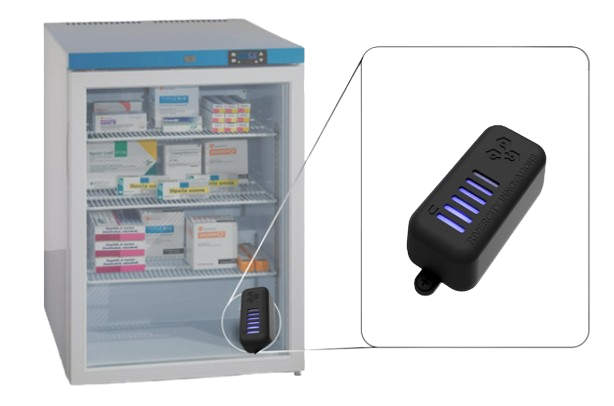
Wireless installs, in less than one hour to full deployment.
Our Automated Temperature Monitoring System is installed within one hour, start to finish. Automate your compliance reporting and reduce product loss across your stores in a fast easy deployment. Designed for small or enterprise brands, we support multiple levels of authentication, reporting, and site monitoring.
Key Benefits
Prevent Product Loss In Real-Time
Get real-time ALERTS before it’s too late. Stay protected beyond regular hours of operation with 24/7/365 monitoring.
Detect Cooler Failure Early
Our system PREDICTS and prevents cooler failures so you can avoid uninsured product losses and minimize cooler down-times.
Save Money With Automation
Improve labour EFFICIENCY to boost productivity & customer service. See an annual return on investment from reduced costs & data-led efficiencies.
Improve Safety Compliance
Stay informed outside regular hours of operation with 24/7 temperature monitoring to PROTECT your customers and reputation.

Express Rx Pharmacy
Our solution helped a Express Rx protect sensitive medications through real-time temperature monitoring. We helped ensured compliance, prevented product loss, and streamlined delivery operations. If you manage temperature-critical inventory, their success story could be yours too.
Get started today!
Automate Compliance Data and Reporting
Without automated monitoring, equipment failures can go unnoticed until it’s too late, potentially resulting in spoiled medications and significant financial loss.
Pharmacy Storage Zones That Require Automated Temperature Monitoring
Pharmacies store temperature-sensitive products across multiple distinct environments – refrigerated vaccine storage, frozen medication storage, dry storage, and laboratory sample zones — and a standard pharmacy refrigerator thermostat displays a current reading without logging data, sending alerts, or recording how long a deviation lasted. Automated pharmacy temperature monitoring closes this gap by checking temperature and humidity every 1 minute, 24 hours a day, across walk-in coolers, freezers, display cases, and ambient storage areas from a single platform. Pharmacy buyers evaluating monitoring systems should confirm that one solution covers all storage zones before comparing technical specifications.
Sensor Accuracy Determines Whether Excursions Get Detected
Pharmacy temperature monitoring requires sensors that detect small deviations reliably, because a reading that is off by a fraction of a degree in either direction changes whether a product remains in service or gets quarantined. Rivercity Innovations’ TxH sensor carries NIST certification and maintains calibration to 0.2°C accuracy for 5 years, giving pharmacy compliance officers a verifiable national accuracy standard for every reading the sensor records. A 5-year calibration window reduces the frequency of recalibration service visits compared to annual-calibration devices, which lowers ongoing maintenance overhead across a multi-sensor deployment.
Humidity Monitoring Protects Medications and Lab Samples
Temperature monitoring alone does not protect every pharmacy storage zone — dry-storage medications and laboratory samples require simultaneous humidity monitoring because humidity excursions accelerate chemical degradation and destroy sample integrity even when temperature stays within range. The TxH sensor monitors both temperature and humidity, making the sensor suitable for walk-ins, coolers, freezers, distribution warehouses, and laboratory environments within a single pharmacy operation. Pharmacies managing multiple storage types confirm that one sensor model covers all environments rather than sourcing separate devices per zone.
Pharmacy Storage Environments the TxH Sensor Covers
- Refrigerated vaccine and medication storage (walk-in coolers and display cases)
- Frozen medication and biologic storage (walk-in freezers and standalone units)
- Dry-storage medication areas requiring humidity monitoring
- Laboratory sample storage requiring combined temperature and humidity oversight
- Distribution warehouse environments for cold chain continuity
Manual Temperature Logging Gaps That Create Pharmacy Compliance Risk
Manual pharmacy temperature logging produces three structural compliance risks that automated monitoring eliminates: after-hours coverage gaps where no staff member records a reading, accuracy inconsistencies where staff round temperatures or log from memory, and audit record fragility where paper logs contain missing entries that health authority inspectors flag as non-compliance. Pharmacies required to monitor refrigerator and freezer temperatures under health and safety regulations face increased non-compliance risk when manual recording leads to missed checks or inaccurate data. Without automated monitoring, equipment failures go unnoticed until the first staff member arrives on site — at which point product loss may already have occurred.
After-Hours Alerts Allow Staff to Intervene Before Product Loss
An Express Rx pharmacy using automated temperature monitoring received an alert after hours that allowed staff to move medications to a functioning cooler, preventing product loss entirely. Manual temperature logging provides no equivalent mechanism — a paper log shows no entry between closing time and the next morning, leaving refrigerated medications unprotected for the full overnight period. Automated pharmacy temperature monitoring delivers real-time alerts to every staff member on the notification list the moment a temperature breaches a user-defined threshold, regardless of time of day.
Manual vs. Automated Pharmacy Temperature Monitoring
| Factor | Manual Monitoring | Automated Monitoring |
|---|---|---|
| Coverage Hours | Operating hours only | 24 hours a day, 7 days a week, 365 days a year |
| Record Accuracy | Staff-dependent; rounding and missed entries common | Sensor-recorded to 0.2°C precision every 1 minute |
| Alert Speed | None — excursion discovered when staff arrive | Real-time alert at moment of threshold breach |
| Compliance Readiness | Paper logs; gaps create non-compliance risk | Electronic timestamped record stored for years |
| Labour Cost | Staff time for logging, compiling, and filing records | Automated data collection and scheduled report delivery |
Scheduled Reports Replace Manual Compliance Compilation
Automated pharmacy temperature monitoring stores temperature data electronically for years, giving compliance officers access to a complete record for any date range a health authority inspector requests. Pharmacies schedule compliance reports to generate and email automatically to management teams, eliminating manual compilation of paper logs before inspections. Multiple levels of authentication and site monitoring allow enterprise pharmacy chains to manage compliance reporting across all locations from one platform.
Technical Specifications Pharmacy Temperature Sensors Must Meet
Pharmacy buyers evaluating automated temperature monitoring systems should assess four technical dimensions: monitoring interval, calibration accuracy, wireless protocol, and installation requirements. The TxH sensor records temperature and humidity every 1 minute, maintains NIST-certified accuracy to 0.2°C for 5 years, transmits data over a LoRa wireless network using 128-bit AES end-to-end encryption, and installs without wiring, Wi-Fi passwords, or power cables. Full pharmacy deployment — sensors placed, gateway connected, and cloud dashboard active — completes in under one hour from start to finish.
LoRa Protocol Delivers 10-Year Battery Life Without Wi-Fi Dependency
LoRa sensors transmit small data packets — temperature and humidity readings — using a fraction of the power that Wi-Fi sensors consume to maintain a continuous network connection, which allows the TxH sensor to reach a battery life of up to 10 years. A LoRa gateway measures approximately 4 inches by 6 inches, installs by plugging into a power outlet and connecting an ethernet cable, and shows as online in the cloud dashboard within minutes of connection. Pharmacies with sensors placed far from the gateway or behind refrigerated case walls benefit from LoRa’s indoor coverage range of up to 500 metres, which maintains connectivity through obstructions that interrupt Wi-Fi signals.
LoRa Sensor vs. Wi-Fi Sensor for Pharmacy Environments
| Factor | LoRa Sensor | Wi-Fi Sensor |
|---|---|---|
| Battery Life | Up to 10 years | Significantly shorter due to higher power draw |
| Network Dependency | Dedicated LoRa gateway; no pharmacy Wi-Fi required | Requires pharmacy Wi-Fi credentials and stable signal |
| Installation | No wiring, no Wi-Fi password, no power cable | Requires network configuration and IT coordination |
| Data Encryption | 128-bit AES end-to-end, two-layer security protocol | Varies by vendor and router configuration |
| Indoor Coverage | Up to 500 metres through walls and obstructions | Limited to router range; signal degrades through walls |
Cloud Dashboard Gives Pharmacy Teams Remote Monitoring Access
The cloud dashboard displays real-time temperature data, sensor connection status, and alarm history, and gives pharmacy managers access from any browser or mobile app without requiring on-site presence. Pharmacy compliance officers download complete temperature records directly from the dashboard and present electronic data to health authority inspectors without manual log compilation. Enterprise pharmacy chains managing multiple locations use multi-level authentication and site monitoring within the same platform to oversee all locations simultaneously from one login.
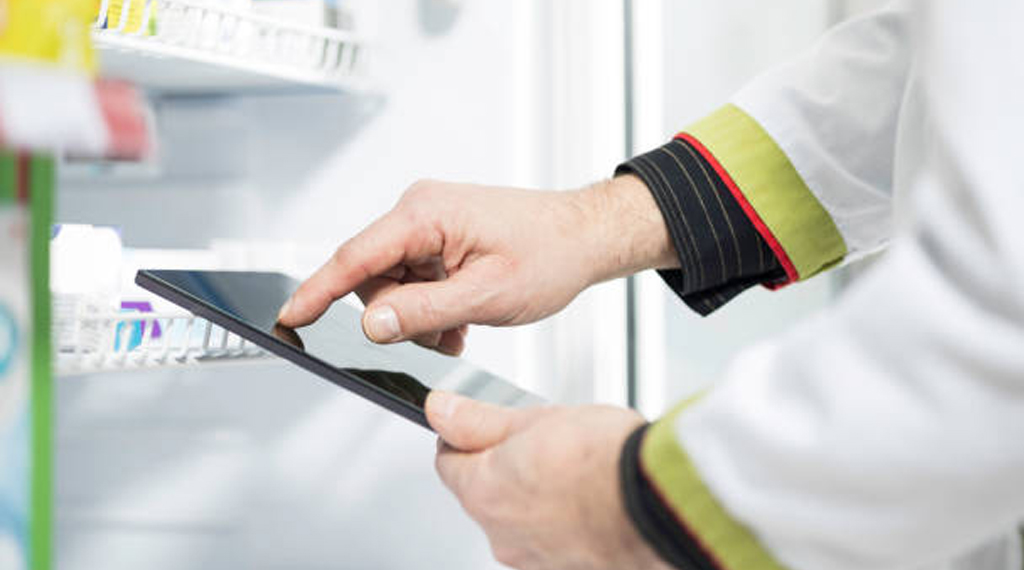
Upgrade to Automated Temperature Monitoring
Our solution provides your pharmacy team with real-time temperature and humidity data, ensuring medications are kept at the highest quality standards while optimizing logistics for safe and efficient management.
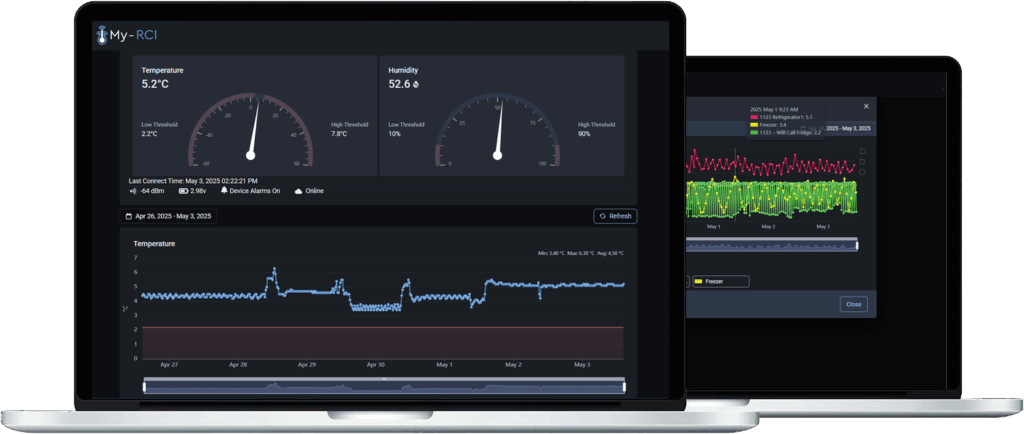

“We received an alert after hours which allowed us to move our medicines to another cooler, preventing the loss.”